When people call me, the first thing I usually ask is not the date. It is “what is the room like?” Because the word magician covers several very different jobs, and the job decides whether the night works.
Here is every kind you will find for hire in Las Vegas, what each one is good at, and where each one goes wrong.
Why the kind matters more than the name
A brilliant stage illusionist dropped into a standing cocktail hour will struggle, because nobody is facing the same way and nobody wants to stop talking. A brilliant close-up magician asked to fill a 400-seat ballroom from a stage will struggle too, because a playing card is very small from row twenty.
Neither performer is bad. They were hired for the wrong job. Match the format to the room first, then pick the best person in that format.
Strolling (close-up) magician
What it is: The magician moves through the event, performing for three to eight people at a time, a few minutes per group. The magic happens in guests’ hands — their card, their ring, their borrowed bill.
Best for: cocktail hours, wedding receptions, conference mixers, open-house parties, anywhere people are standing or seated at separate tables.
Why it works: it breaks the ice without asking anyone to stop what they are doing. Strangers end up talking to each other about what they just saw. At a business event that is the whole point.
Needs: nothing. No stage, sound, lighting or setup time.
Watch for: booking too little time. Two hours reaches roughly 100 to 150 guests in small groups.
Parlor magician (seated set)
What it is: Everyone sits and watches one performance together, usually 20 to 45 minutes. Close enough that people can still see what happens in a volunteer’s hands, big enough that the whole room shares the moment.
Best for: private dinners, birthday parties with everyone seated, small corporate dinners, after-dinner entertainment. It works best under about sixty people.
Needs: a spot where everyone can see, and sometimes a microphone.
Watch for: putting it in a room where half the guests are still at the bar. A seated set needs a seated audience.
Stage magician (illusionist)
What it is: A theatrical show with large props, often assistants, staged lighting and music. The kind of thing you see on the Strip.
Best for: large seated audiences — galas, company meetings, theater-style events — where you have a stage and a technical crew.
Needs: a stage, load-in time, sound, lighting and usually a production budget to match. Expect several thousand dollars and up.
Watch for: booking it for a mixer. A stage act asks everyone to face the same way and stop talking, which is the opposite of what a networking event needs.
Mentalist
What it is: Mind reading, predictions and apparent influence — knowing a word someone only thought of, predicting a choice before it is made. No cards needed, though many of us use them.
Best for: adult and corporate audiences. Mentalism tends to land hardest with skeptical, analytical rooms, because it is about people rather than props.
Needs: works close-up or as a seated set; nothing special either way.
I go into much more detail in what a mentalist actually does.
Comedy magician
What it is: Magic where the laughs carry as much weight as the tricks. Most good close-up performers are funny; a comedy magician leads with it.
Best for: rooms that need loosening up — holiday parties, team events, birthdays.
Watch for: material that does not fit your audience. Ask how they adjust for a client dinner versus a late-night party.
Trade show (booth) magician
What it is: Short, repeatable sets at the front of an exhibit booth, built to stop foot traffic and hand people to your sales team. A specific skill: loud enough to draw a crowd, quick enough to hand it off.
Best for: convention exhibitors, hospitality suites, product launches.
See my guide to how booth magic actually works at a Las Vegas convention.
Children’s magician
What it is: A show built for young kids — bright props, lots of participation, a different rhythm entirely.
Best for: birthday parties for children under about ten.
This is its own craft, and I am honest about it: my material is built for adults and teenagers. For a six-year-old’s party, hire a children’s specialist. For a sixteenth birthday, I am a good fit.
How to choose: a quick table
| Your event | Best fit |
|---|---|
| Wedding cocktail hour | Strolling |
| Conference mixer or reception | Strolling, with mentalism |
| Trade show booth | Trade show / booth magician |
| Private dinner, 10–50 guests | Parlor set |
| Holiday party | Strolling during arrival, short parlor set after dinner |
| Gala for 300+ with a stage | Stage magician |
| Child’s birthday under 10 | Children’s magician |
| Teen or adult birthday | Strolling or parlor |
You can combine formats
Some of the best nights use two: strolling magic while people arrive and mingle, then a short seated set once dinner is done and everyone is in one place. The first job warms the room up; the second gives it a shared moment to finish on. If you book one performer who can do both, you are not paying for two.
What I do
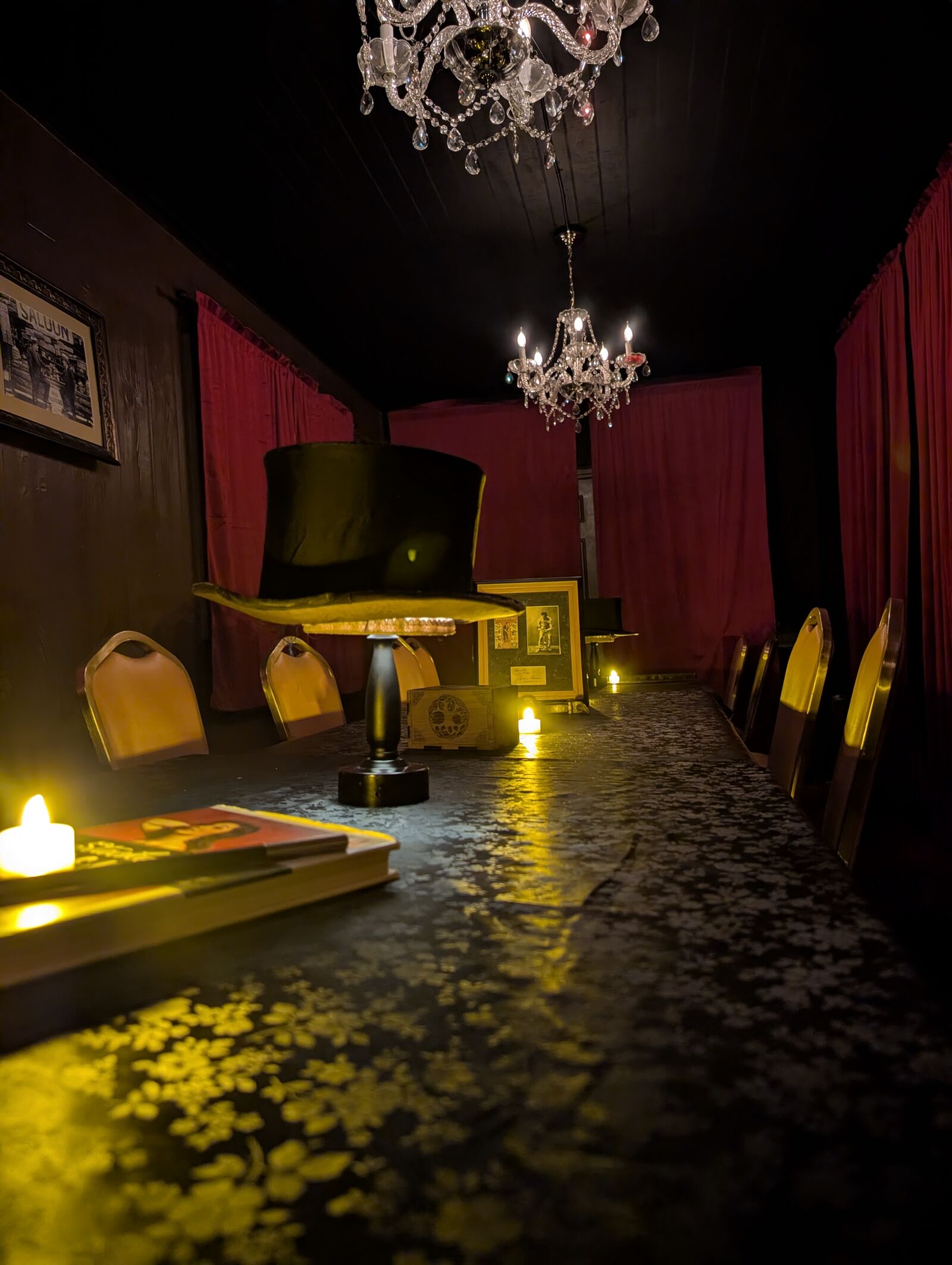
Close-up magic, mentalism and comedy — strolling, or as a seated parlor set, or both in one evening. No stage illusions, no assistants, no smoke machines. Thirteen years as house magician at Capo’s Speakeasy, where the audience sits close enough to catch you. If that sounds like your room, tell me about it below. If it does not, I will tell you that too, and usually who to call instead.